Description
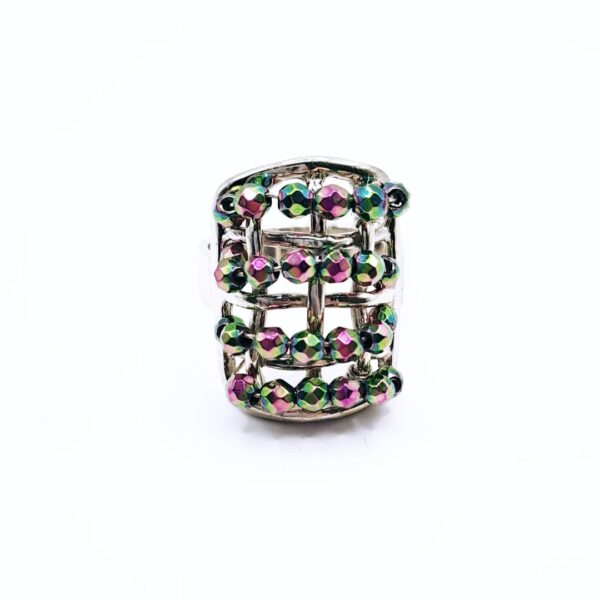
Turtle ring.
Silver 925, plated with Serpentine.
Handmade silver ring with Serpentine stone from the Infinity series.
-The term Serpentine refers to a large family of minerals whose differences are macroscopically insignificant to the extent that it is impossible to separate them macroscopically (Antigorite, Lizardite, Chrysotile, Asbestos).
-Serpentine is a secondary mineral of the most widespread in nature and is a product of the alteration of magnesian silicate minerals, particularly olivine.
-It is found in igneous and metamorphic rocks.Particularly well known in Greece is the serpentinized peridotite, which is often found in Northern Greece.
-Due to its low hardness and ease of processing, it was used by mankind as early as the Neolithic era (5000-3000 BC) for the manufacture of artifacts.Especially in the Bronze Age and in Minoan Crete (2300-1250 BC).It was used as an architectural building material (base of columns, paved floors) in palatial or other buildings (Knossos, Phaistos, Palekastro, etc.) but also as a raw material for stone objects (seals, miniatures, tools) and others, which seem to be related even to cult rituals (compasses, offering banks).
-In antiquity this stone was called Ophitis stone (from the word “ophis” = snake), because of its similarity with the spotted and scaly skin of snakes and we can assume that its cultic use in Prehistoric times may be related to this very similarity, since the snake symbolized the deep hidden wisdom and knowledge of the great Mother Goddess (Potnia Theron, Gaia). Also, since ancient times (Roman times) we know that the Ophitis was used as a remedy for headaches and snake bites. The name Serpentine comes from the Latin Serpens = serpentine snake
*All our jewelry is accompanied by a certification of quality and authenticity of metal and precious or semi-precious stones.
*Covid19: The preparation of your orders is done following all health rules.
*All our jewelry is Nickel free.